![]() |
Many
parts of the SP model (i.e. the latest durable shutter made of titanium
curtains, controls and levers) were to be shared with the SLR. Between
1948 and
1957 the rangefinder models were among the gracefulliest of its class -
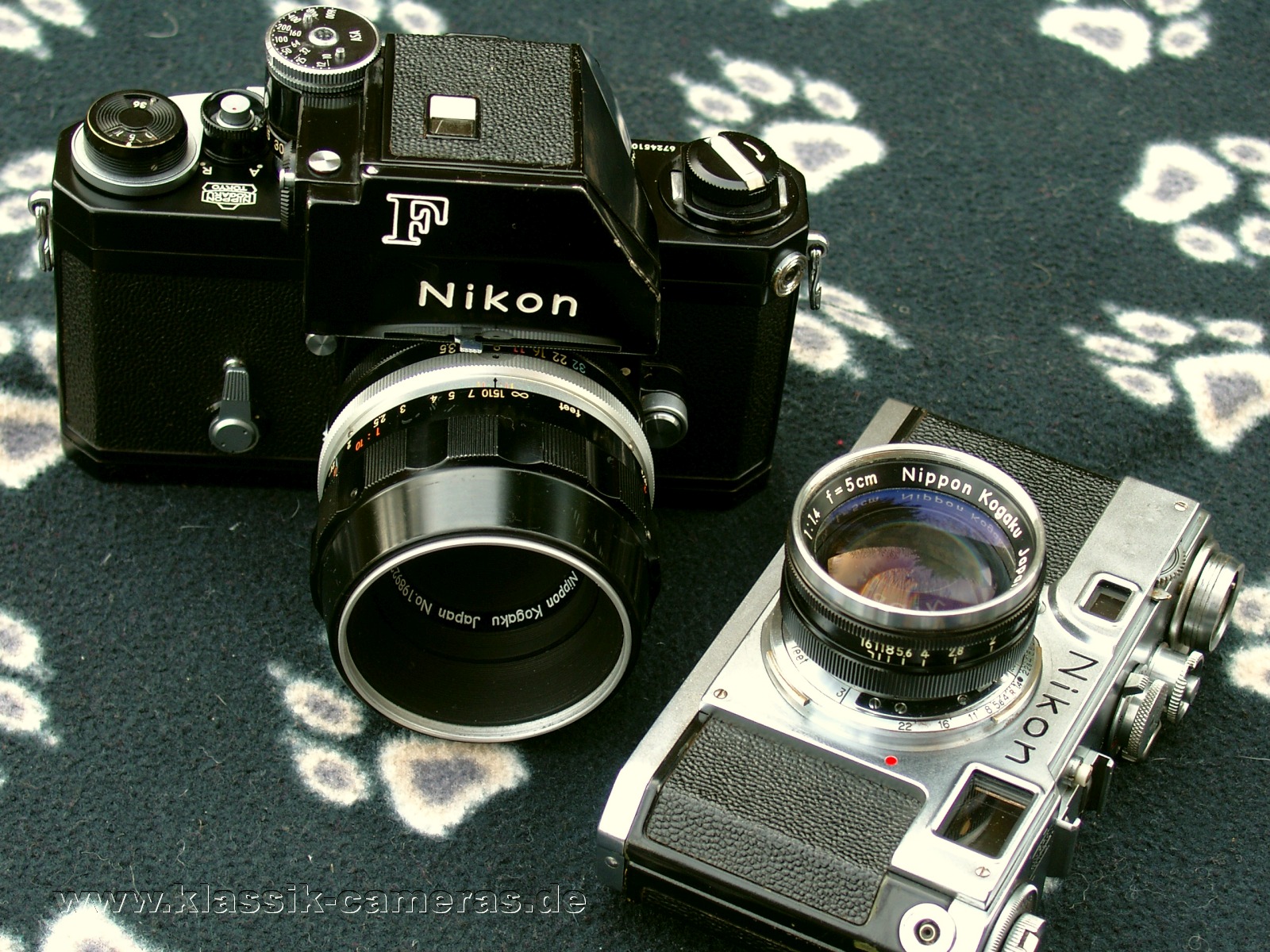
in contrast the SLR model NIKON F was considerable larger sized than its
major rivals - except German Zeiss-Ikon Contarex, also launched in
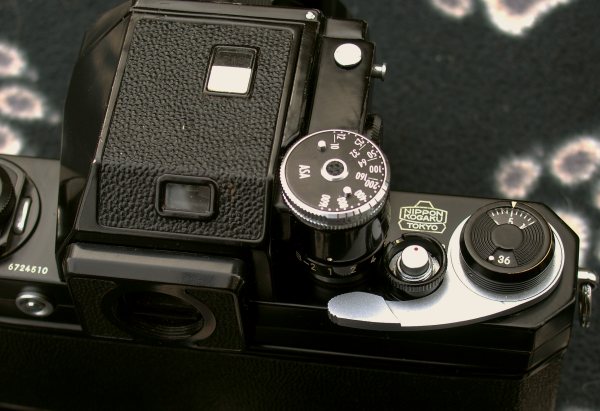
1959. Like the venerable Exakta Varex, the NIKON F had
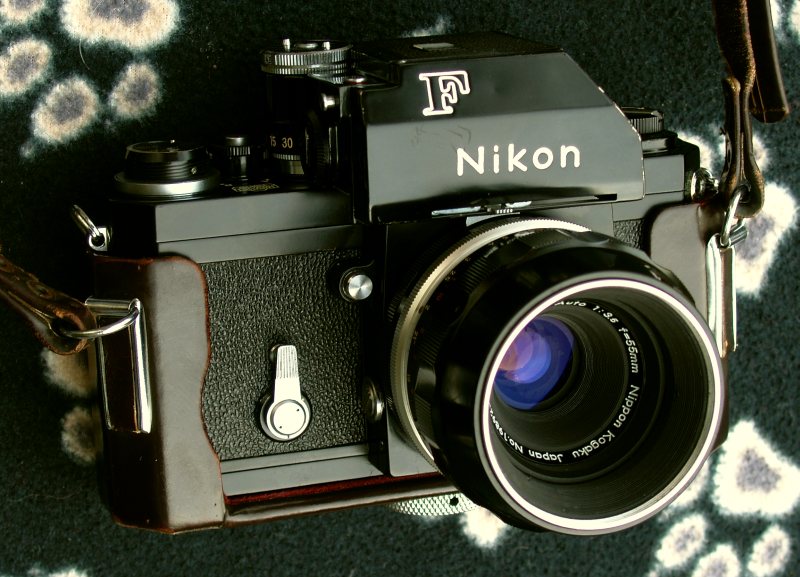
changable finders. It started with a Non-meter-pentaprism and
waist-level-finder. The first metered prism with a brand-new CdS-cell
(no TTL yet) called Photomic-F followed 1960. Featuring instant return mirror, big 48mm lens opening bayonet mount including fully automatic diaphragm, 100% finder and a functional form the NIKON F then was the most versatile modern SLR on the market, although lens-changing with coupling the full-aperture-metering for the Non-AI lenses (until 1977) was an annoying and time-consuming procedure. |
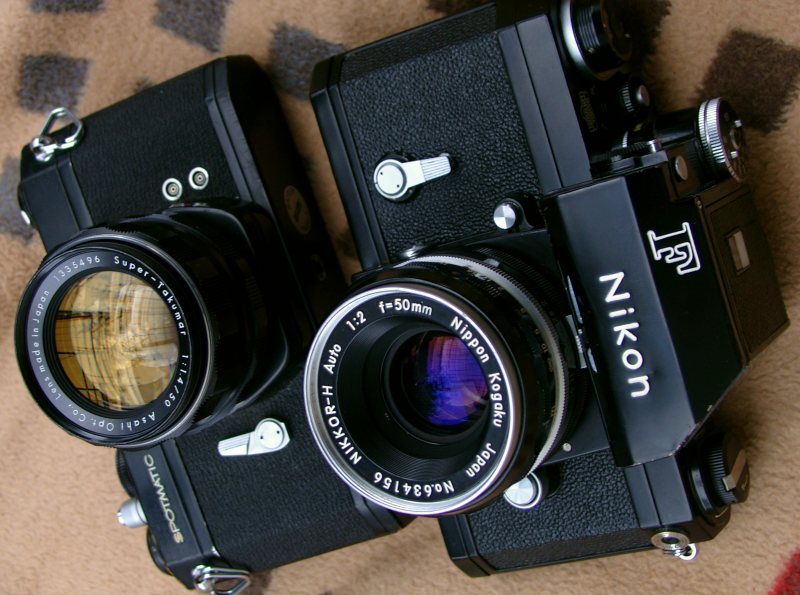

|
NIKON
had a Sonnar-based "f/1.4 lens" for the rangefinder cameras since 1949
which had an excellent reputation by professional photographers - most
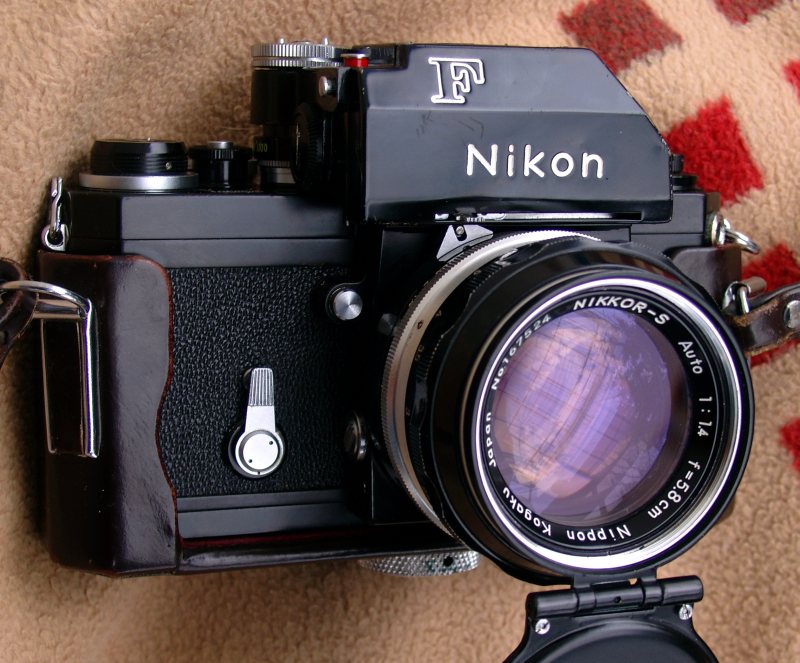
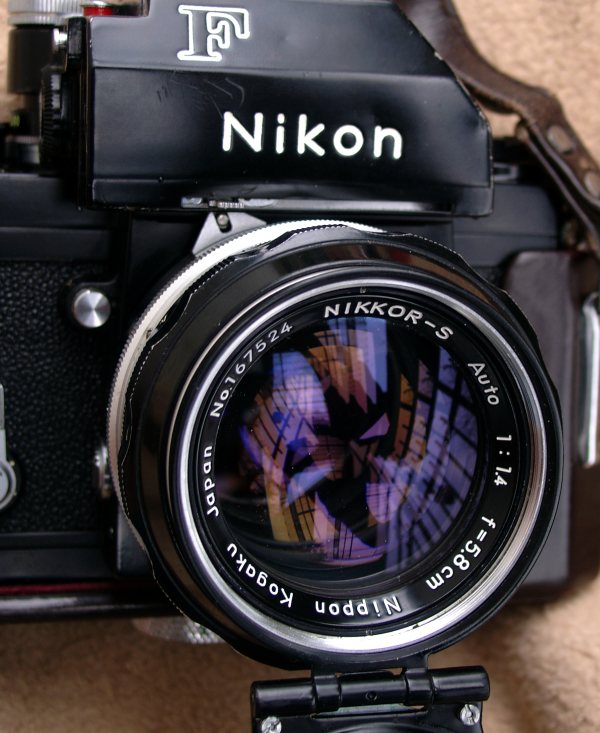
say, better than the Zeiss Sonnar. But due to its compact length and short clearance couldn't be used on SLR cameras, needing "longer" lenses which results in many manufacturers making normal lenses of 55-58mm instead of the regular 50mm in these earlier SLR days. NIKON was no exception, introducing their first f/1.4 SLR lens with a focal length of 5.8cm. Just 4 years later it was replaced by a more common 1.4/50mm |

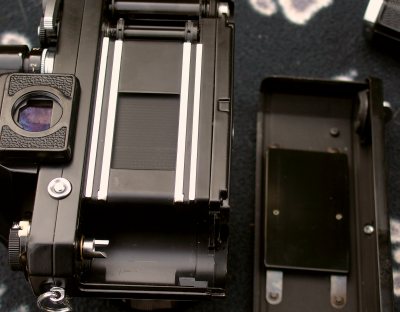
Titanium shutter curtains and
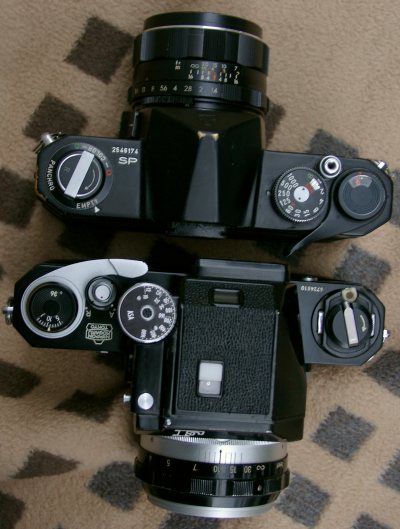
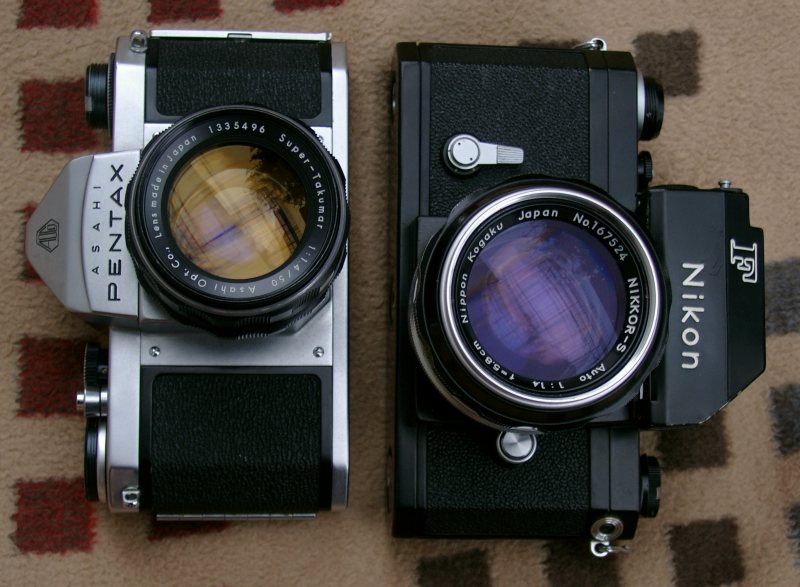
removable back of the NIKON F![]() Between 1964-1968 PENTAX sales still run better than NIKONs, even with professional photographers. Two excellent camera choices in 1965: The SPOTMATIC offering TTL-metering as the first camera at the market and weighting low 850g with the newly designed compact (8-element, first-gen.) 1.4/50mm lens. The NIKON F with Photomic FTN and 1.4/5.8cm (7 elements) weights heavy 1150g. |
![]() |